



He wants all dental technicians to join NITO
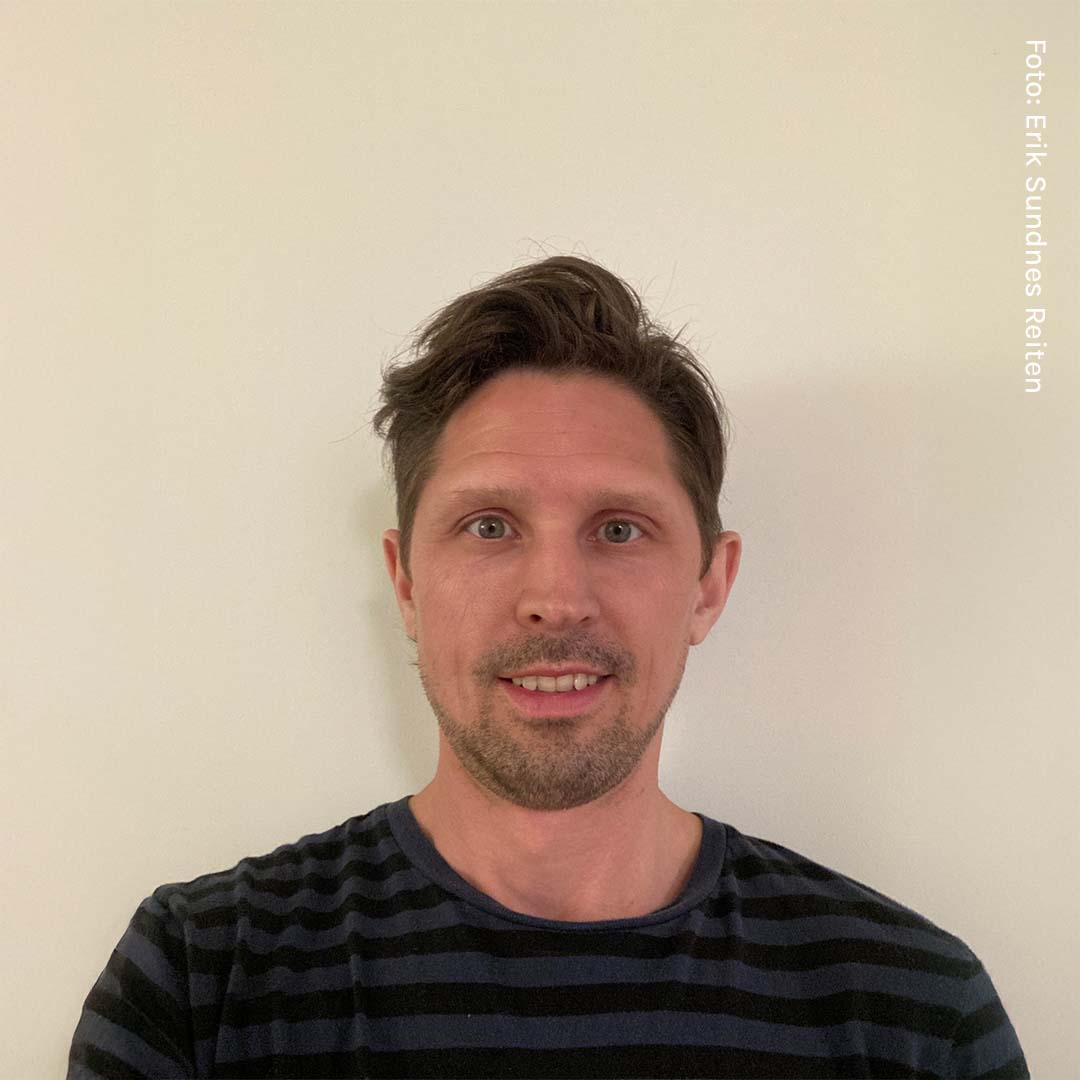
"We are in practice the dental industry's engineers. I want the entire profession to join NITO. Here we get a stronger voice, better conditions and more professional weight," says dental technician Erik Sundnes Reiten.
He calls himself a "dental engineer" and is clear about where he belongs. Not because he wants to distance himself from the dental technician profession, but because the tasks and knowledge belong to the engineering and technology community.
For Reiten, organizing is not about symbolism, but about influence and security in a rapidly changing working life. He believes NITO is the natural employee organization for today's dental technicians.
"I am pleased that more and more technicians in dentistry are finding their way to NITO," he says.
High-tech everyday life and great responsibility for patients
Dental technicians are defined as manufacturers of individually adapted medical equipment, with strict requirements for quality and documentation. The demand for labor is said to be high.
Reiten's working day is described as digital, precise and patient-oriented.
He explains:
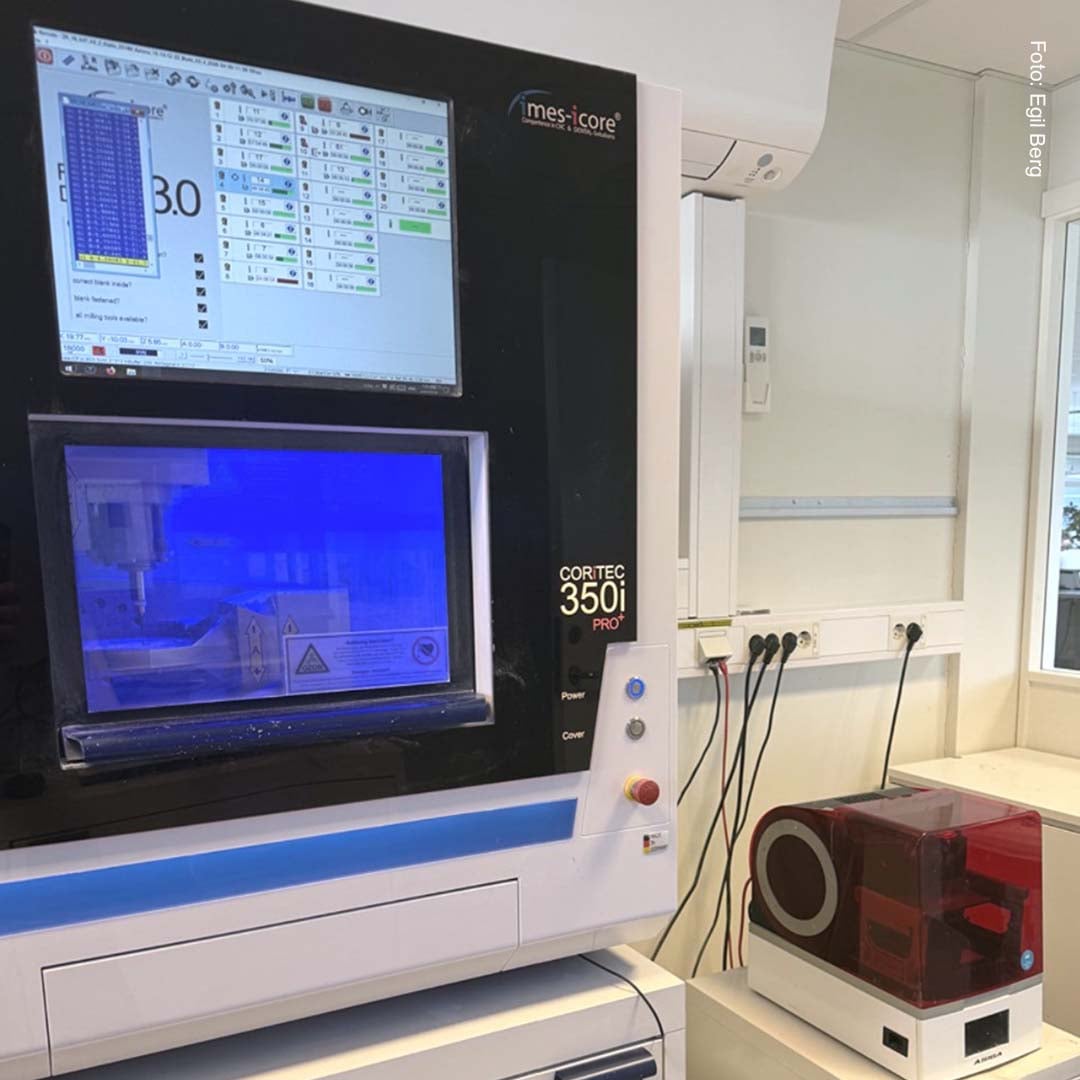
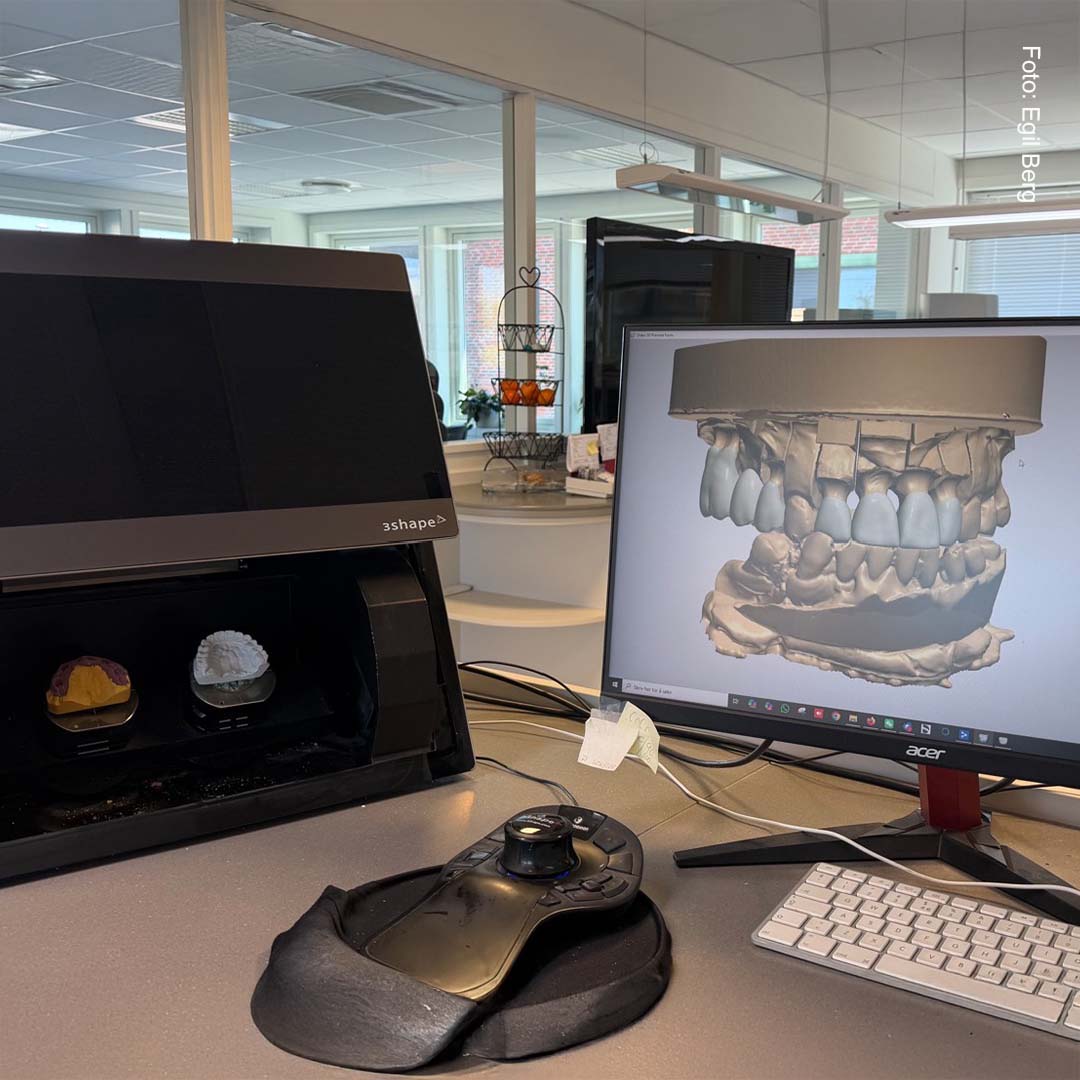
- I design tooth replacements on the computer. I do Computer-Aided Design (CAD) of dental crowns, bridges, implant prosthetics, removable dentures, as well as the models and other things we need for completion. This is then milled or 3D printed in our milling center, what we call Computer-Aided Manufacturing (CAM).
"Then we complete it in the laboratory, before it goes out to our customers," he says.
In addition, Reiten and his colleagues work with foreign partners on parts of the production. They also carry out repairs in the laboratory and have patient contact on referral from the dentists.
High competence
"We are in the middle of the intersection between health, technology, craftsmanship and the patient. It requires a high level of expertise," he says.
Reiten points out that the education has been at bachelor's degree level since the late 90s.
"Many of the older people in the industry, both colleagues and customers, still do not see us as a higher educated professional group," he says.
He himself has a bachelor's degree in dental technology from Oslo University College (now OsloMet) and two years of clinical extension at the University of Aarhus. From the autumn of 2026, dental technicians will be trained from the Faculty of Dentistry at the University of Oslo. Now he has a job he enjoys in Hønefoss.
He experiences a mismatch between the level of expertise, the responsibility as a health professional and the willingness to pay for this. Both dental technology employers and the Norwegian Dental Technicians' Association believe that the demand for employees is high. This is also shown by the number of students admitted to the programme.
"Nevertheless, the wage level is far below comparable occupational groups," he says.
Reiten believes it is time for dental technicians to do what most other occupational groups in Norway do; to become part of a relevant employee community.
"We need someone who represents us in a type of tripartite cooperation, the model that working life in Norway is built on. I believe NITO is the key to both a stronger professional environment, political influence and the right conditions for employees in the profession," he says.
And he reminds us that the tripartite cooperation in Norway works for all parties. Also for the employers and the authorities.
Dental technicians have an important job
For him, the professional name "dental engineer" is about more than a fancy title – it's about being taken seriously as a highly competent professional group.
"Part of our job is to be advisors to the dentists, so that they are able to perform their own jobs and end up with a good prosthetic result. We have a lot to learn from them, but they also learn a lot from us," says Reiten.
- Sometimes it seems that the dentists expect us to teach them the dental profession. I think we are happy to do that, but we want to be recognized and also paid for it. After all, we have invested a lot in acquiring the expertise and we are authorized health professionals who take our share of the responsibility for the patient's safety, he emphasizes.
He further explains:
- My hypothesis is that some of the biggest challenges my profession has come from a lack of tradition for trade unionization, Employers and employees have simply not worked together for the good of the industry. Employees have had no separate union at all. This means that the membership base that works for the industry's development has been and is very small. Then you do not have a strong position in discussions with the authorities, when laws and conditions are formulated.
Become a trade union
"Today, the Norwegian Dental Technicians' Association (NTTF) is in practice both an employer and an employee union," says Reiten.
He thinks this is unfortunate. And explains:
- In the vast majority of industries, there is a clear distinction between employers and employees in the union's work. Take the orthopedic engineers, for example, which is our most closely related occupational group. These are also so-called "manufacturers of individually adapted medical equipment". The orthopedic engineers have the National Association of Orthopedic Technology Enterprises (OVL) for the companies and NITO Orthopedics for the employees. Dental technicians should have something similar, with NTTF for the companies and NITO "Dental" for the employees, he says.
Why should dental technicians choose NITO?
For Reiten, NITO is the natural choice:
- NITO is the employee organization that I belong to as a dental engineer. Here you will find the engineering and technology community, important salary statistics, interesting courses and good opportunities for professional development.
He particularly highlights the salary statistics , which provide a concrete basis for salary discussions.
"NITO also gives us a strong engineering and technology environment to identify with. And an updated, clear online platform that presents all the member benefits in an excellent way," he says.
NITO's "contract check" is also something Reiten values.
- The contract check is an offer where NITO's lawyers review your employment contract. Especially nice when you change jobs, and where you have the opportunity to make the contract better. This is a very useful tool! For young people, recent graduates and professionals from abroad in particular, this is worth its weight in gold. Many people do not know what is "normal" in Norwegian working life, he says.
Reiten makes use of the bank and insurance agreements through NITO and watches webinars and live-streams. He follows the courses that are offered and will participate when the right thing arises.
Dental technicians are welcome at NITO
Dental technicians are a professional group that engages in high-level technical work, and are therefore an important group for NITO.
"With the profession's technical bachelor's degree, this means that most dental technicians qualify for membership," says Maria Honerød, adviser in NITO's admissions team.
She states that students who take a bachelor's degree in dental technology also qualify for student membership in NITO.
Why is it important for dental technicians to be unionized?
Reiten talks about the importance of a high degree of unionization:
- Because that is how working life in Norway works. Everyone should support tripartite cooperation, orderly working conditions and clear communities of interest. We benefit from this in the long run, all parties.
Reiten emphasizes that you need someone "behind you", both when it comes to professional development and when conditions are to be defended or improved. This is both as an individual and as a professional group.
In the future, he envisions a unified, clearer dental technician group in NITO.
"I see our future as part of NITO, as a natural part of the engineering and technology family. There are many dental technicians who have already found their way to NITO, and more are on the way," he says with a broad smile.