





Ukrainian Artem settles refugees from their home country
NITO member Artem Surgai came to Norway in 2011, and has completed his entire engineering education here. Now he has given refugees from war-torn Ukraine a place to live.
He comes from a town called Dnipro, where he lived until he was 22 years old.
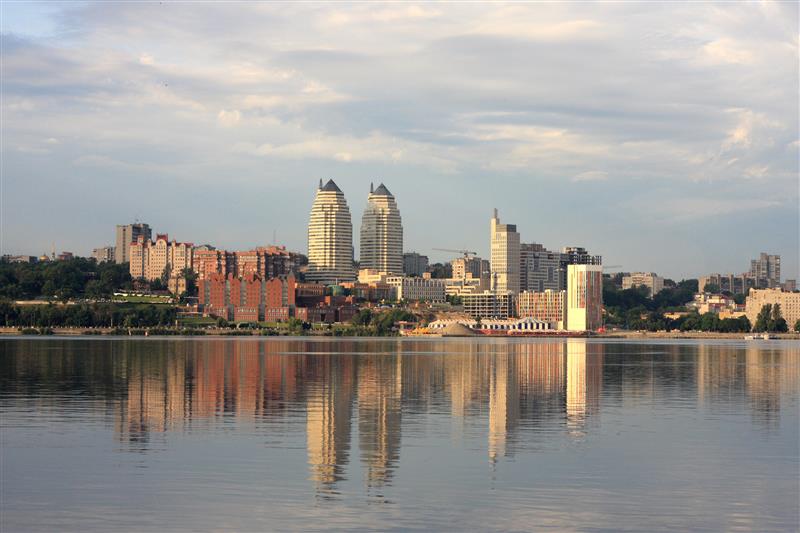
It is the fourth largest city in Ukraine. Dnipro is located southeast of Kyiv, on the river of the same name.
Surgai took a master's degree in economics in Ukraine, and worked in banking. But he eventually found out that it was the wrong profession for him.
Norway was not a completely random choice:
"An acquaintance had relatives in Norway, who recommended that we come here and get an education. We applied for a study place, and got it," he says.
"The most important thing is to prioritize learning Norwegian"
First, he took a year of Norwegian courses in Alta, and decided to move on to engineering at the University of Tromsø, after he had taken a preliminary course.
"I believe that putting the highest priority on learning Norwegian is the most important thing you can do when you arrive in Norway. For example, the language opens up job opportunities, and at work you get to know both Norwegians and other foreigners, and you make friends," he says.
"To learn the language as quickly as possible, you have to talk as much as possible. Reading newspapers or watching Norwegian TV is nice, but talking to others is certainly the best way.
Artem Surgai
He recommends taking advantage of free language courses from the municipality.
"I also recommend not closing yourself in Ukrainian or Russian language groups. I know that many foreigners gather in such groups and only speak their mother tongue, but it can be a major barrier on the way to integration," he states.
Responsible for housing project for refugees
After working a bit in Trøndelag, the 34-year-old moved to Oslo almost two years ago.
He now works as a project manager at Boligbygg. He is involved in the rehabilitation of municipal housing. They manage 11,700 municipal homes in the city.
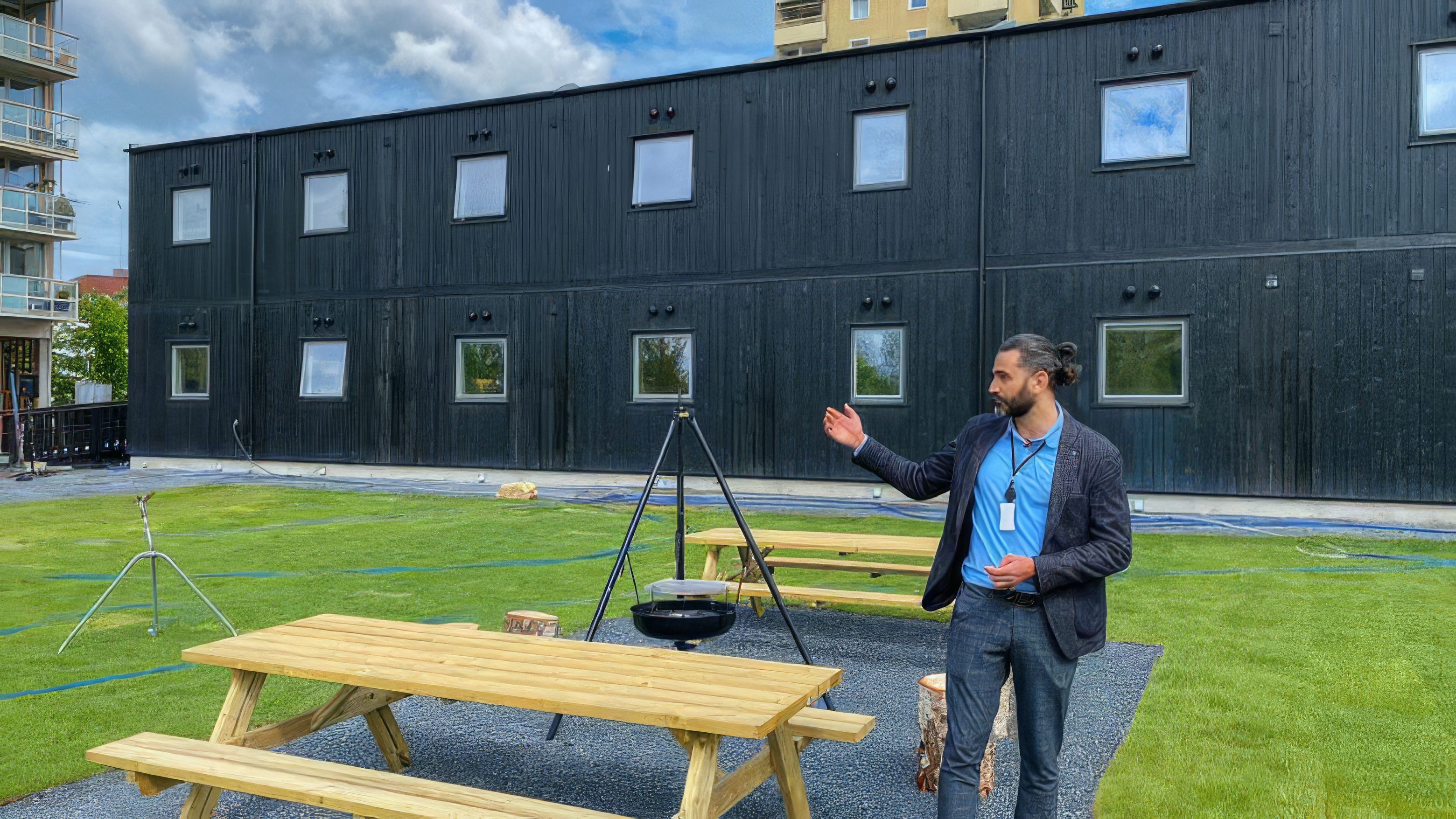
Surgai has also been given responsibility for new housing for Ukrainian refugees in Oppsal, which Vårt Oslo has written about.
"When the war began, I got this project. I don't know if it was because I'm from Ukraine, or because I have the capacity for it. I'm very happy that I got the project," he says.
"Do you enjoy responsibility?"
"Both yes and no. Mostly yes. It's a lot of stress, but when you're done with a big project, it's quite satisfying," he admits.
"Very worried about the family in Ukraine"
In Oslo, he lives with his wife, who is also from Ukraine. Both have family who are still in the war-torn country.
"We are very worried. My parents and sisters are still there. They cannot flee due to various familial reasons. Among other things, because of the health condition of some family members," he says.
The engineer talks about how he experienced it when the war broke out:
"The first day was a big shock. It's hard to describe. I contacted my parents and tried to find out what was happening. It felt like the end of the world.
Surgai was on sick leave from work at the start of the war.
"I couldn't concentrate. In order not to just sit at home, I started volunteering. I joined and did humanitarian support to Ukraine.
After a few weeks, he was back at work. But he is still worried about his family in Ukraine.
"I'm stressed all the time. I have an app on my phone that shows when the air alarm goes off in my hometown. It runs on average three to four times a day. Every time it goes, I feel a lot of stress.
Pleasantly surprised by Norwegian media's coverage of the war
Surgai himself was at home in Ukraine just a month before Russia's invasion of Ukraine on February 24, 2022.
He says that he is following Ukrainian sources, to get what is happening.
"At the same time, I read what is written about the war in the Norwegian news. I am quite pleasantly surprised at how well it corresponds to reality. There are contradictory articles in some media," he says.
The 34-year-old says he observes Russian news sources to compare.
"They are two different worlds. It's completely insane and surreal what comes from them," he says.
Random choice of profession
– Why did you choose to become an engineer?
"It was quite a coincidence. I have an education as an economist, and have worked a lot in banking. But I had to admit that it wasn't for me. I decided to move on, and applied for an engineering degree. After the first semester, I enjoyed it. So then I completed it.
"It's a job that provides a lot of flexibility. You can control your own day," he says.
It was colleagues who first introduced him to NITO.
"My colleagues in my first job in Trøndelag were members of NITO. They recommended me to join.
Artem Surgai
"I think it's good to be unionized, in case you need help. We have a union representative here, so if I have any questions, I can contact the union representative. I feel more protected," he adds.
"What do you think about the future?" Are you still living in Norway?
– Yes, definitely! I've lived here for a little over 11 years now. I will continue to live in Norway," he concludes.